

Mesh puts a pattern across the view
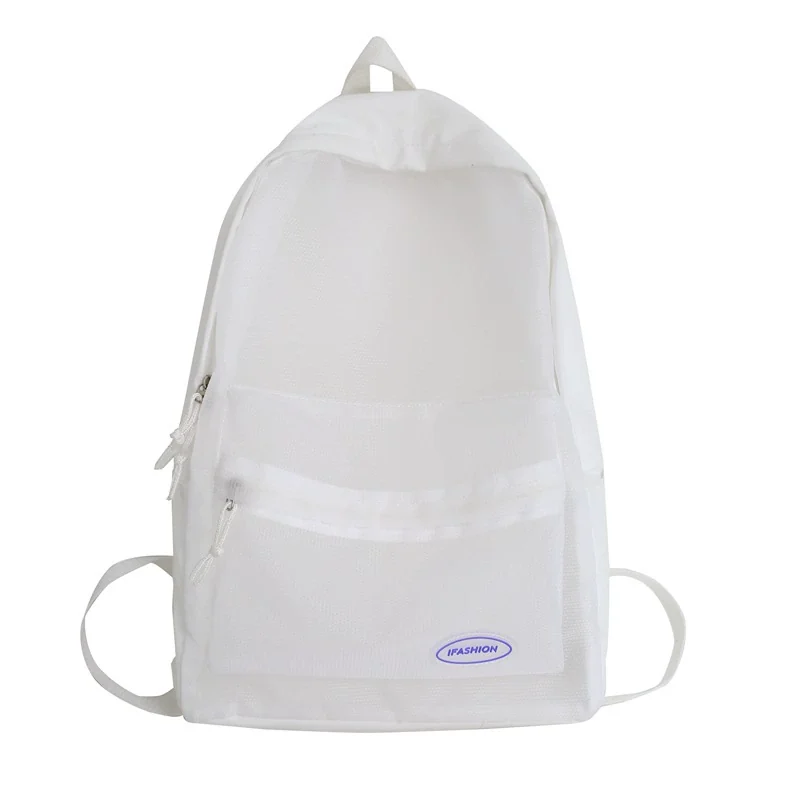
A mesh body has a visible network of small openings. You see the contents through that network, with the mesh and edging still part of the view. FG-116A shows this clearly: white bands frame the mesh body and a separate front zip pocket. Its listed size is 30 × 14 × 42 cm, in length × width × height order. Look at the whole bag as well as the pocket when deciding how open you want the appearance to be.
Clear panels give a different surface
A clear sheet gives you a continuous transparent panel rather than a mesh pattern. The body, front pocket, back and coloured trim still need to be considered separately: a clear face alone does not describe the rest of the backpack. For a school clear-backpack project, we work from the programme’s own brief and discuss PVC or TPU options for the selected design. A physical sample brings the chosen panels, seams and straps together, so you can judge the complete view rather than one close photograph.
A display pocket is only part of the bag
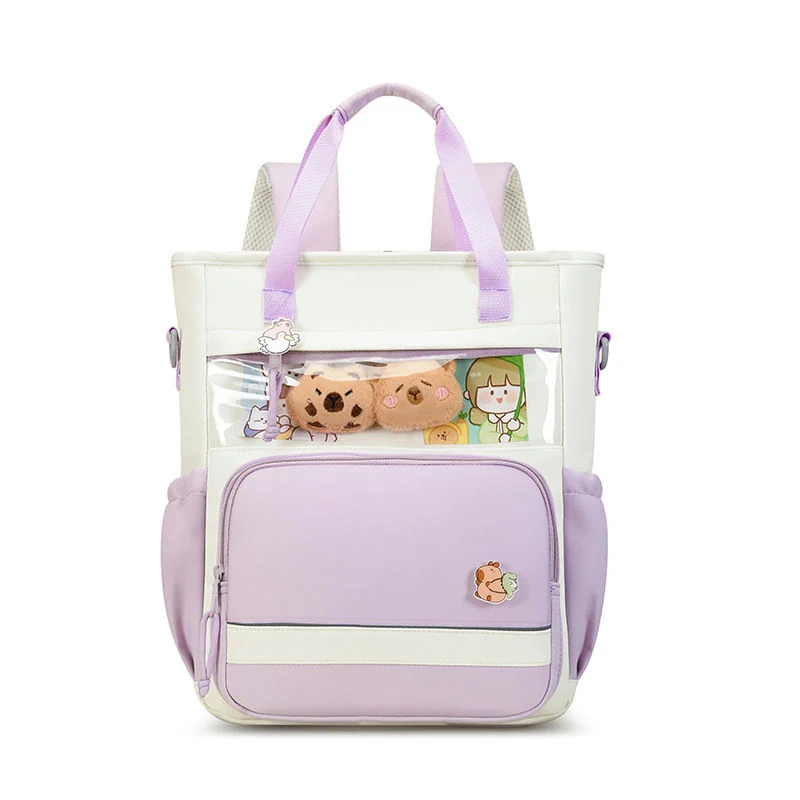
Some backpacks use a small transparent area to show decorative pieces while keeping the main body in fabric. FG-113 is one example: its horizontal clear display pocket sits above a larger coloured zip pocket, beneath two short handles. That is a different design from a whole clear backpack. If your collection centres on a character, badge or small display, the window can be planned around that idea. Any decorative pieces shown in reference photos are agreed separately from the bag itself.
Bring visibility and branding into one sample
Start with the view your customer needs, then bring in the colour and artwork. On FG-116A, we can discuss the front label and white trim; on a display-pocket design, the artwork can sit around the window. Our designer prepares a free visual before ordering, and the in-house pattern room develops the chosen details. If you supply several schools or retail programmes, keep a separate line for each model, required panel layout, colour and quantity. Your named salesperson keeps those versions together and follows the project through sampling and shipment arrangements. Available stock versions start at 500 pieces per model and colour; custom versions start at 1,000. Share the current programme brief and your arrival date with your Feima contact. Custom samples take 15 days to prepare, with courier and your review time added, so the sample decision and delivery plan can be discussed together.